Gluco Mild Official Website › Choosing a supplement
Choosing a supplementChoosing A Circulation Supplement: Seven Checks
Seven questions answerable from a bottle and a website in about five minutes: is an amount printed for every active, is the plant part named, does the form match the trials, does each amount sit in the researched range, do the seals agree with the ingredient list, is there a refund route with a telephone number, and does the label stay inside what a supplement may claim.
A checklist you can carry to any shelf, applied at the end to the bottle sold here.
Why a checklist beats a ranked list of brands
What seven fixed questions can do that a comparison table cannot.
Ranked lists age badly and are almost always written by somebody selling one of the entries. A checklist survives, because the questions do not change when the products do and you can answer them standing in an aisle with a bottle in your hand.
Every check below is answerable from information a company has already chosen to publish. None needs a laboratory, a subscription or a background in pharmacology, and none asks you to judge whether an ingredient works. That question belongs to the companion guide and to the trials it cites.
What these seven measure is whether a label tells you enough to hold it to account. That is a lower bar than proving an effect, and a great deal of this category fails it anyway.
The seven checks
In order of how much each one tells you, most informative first.
1. Is an amount printed for every active?
This is the check the other six depend on. Without a milligram figure per ingredient, no comparison with any trial is possible and no other question can be answered numerically. A proprietary blend at least prints a total, which sets a ceiling; a label with no panel at all prints nothing to set a ceiling on. Federal labelling practice expects a Supplement Facts panel, and its absence is the loudest thing a bottle can say.
2. Is the species and the plant part named?
Butcher's broom root and butcher's broom aerial parts are two materials. Horse chestnut seed extract and raw horse chestnut are two materials, and one of them NCCIH calls unsafe taken by mouth. A label naming only the plant has left out the detail that decides whether the research applies, and often the detail that decides whether it is safe.
3. Does the form match the form that was studied?
Hawthorn is the sharpest example. The heart failure trials used one specific standardised extract, WS 1442, and a bottle carrying hawthorn fruit powder is not carrying what was tested. The same applies to a titrated triterpenic fraction versus gotu kola leaf, and to an aescin-standardised seed extract versus a seed powder.
4. Does each amount sit in the range its trials used?
Arithmetic, once check one passes. Fifty milligrams of aescin twice daily for horse chestnut; 60 mg twice daily of the titrated gotu kola fraction; 1,800 mg a day of WS 1442, where the same trial's 900 mg arm failed; 400 mg a day of grape seed extract. An amount far below the researched figure is a name on a panel rather than a dose.
5. Do the seals agree with the ingredient list?
Badges are assembled for a company and applied to a product, which is how a manufacturing seal ends up standing in for a test of a formula. An FDA-registered facility roundel is a statement about a building. A GMP mark is a statement about a process. Neither is a measurement of what is in the bottle, and a website treating them as one is worth reading sceptically.
6. Is there a refund route with a telephone number and an address?
This is the check that protects you when the first five have gone badly. A published telephone number, a named returns address and a stated window are what turn a disappointing purchase into a recoverable one. A window that exists only as the word guaranteed on a seal is not a term you can rely on, and it is worth finding the number of days before you pay rather than afterwards.
7. Does the label stay inside what a supplement may claim?
Structure and function claims are permitted; disease claims are not. A bottle promising to treat varicose veins or to improve a blood test has stepped outside the framework, and a company careless about that line is unlikely to be careful about the others. Check the marketing artwork as well as the label: the two often disagree, and only one of them arrives in the box.
The five-minute version
The same seven checks as a table, for reading with a bottle in your hand.
| Check | What a good answer looks like | What a poor one looks like |
|---|---|---|
| Amounts printed | A panel with a milligram figure on every row | No panel, or one total covering several ingredients |
| Plant part named | Seed, root, leaf or fruit in brackets after the name | The plant name alone |
| Form matches the trials | The standardised extract the research used, named | A powder or an unspecified extract |
| Amount in range | At or near the figure the trials ran | A fraction of it, or unknowable |
| Seals match the list | Badges that describe what they actually cover | A factory badge presented as a product test |
| Refund route | A telephone number, an address and a number of days | A seal saying guaranteed with no period |
| Claims inside the line | Support language, with the required statement | Disease language, or artwork the label does not support |
Seven rows. Three poor answers is a shelf-full of products, so the question is which three, and whether the first row is one of them.
The order matters more than the total. A bottle that fails checks five and seven is carelessly marketed. A bottle that fails check one cannot be assessed at all, which is a different kind of problem and a worse one.
Check six is the one to run before paying rather than after. Everything else can be reconsidered at leisure; a return window cannot.
The seven checks applied to Gluco Mild
The bottle this website sells, run through all seven checks without adjustment.
| Check | Result | Why |
|---|---|---|
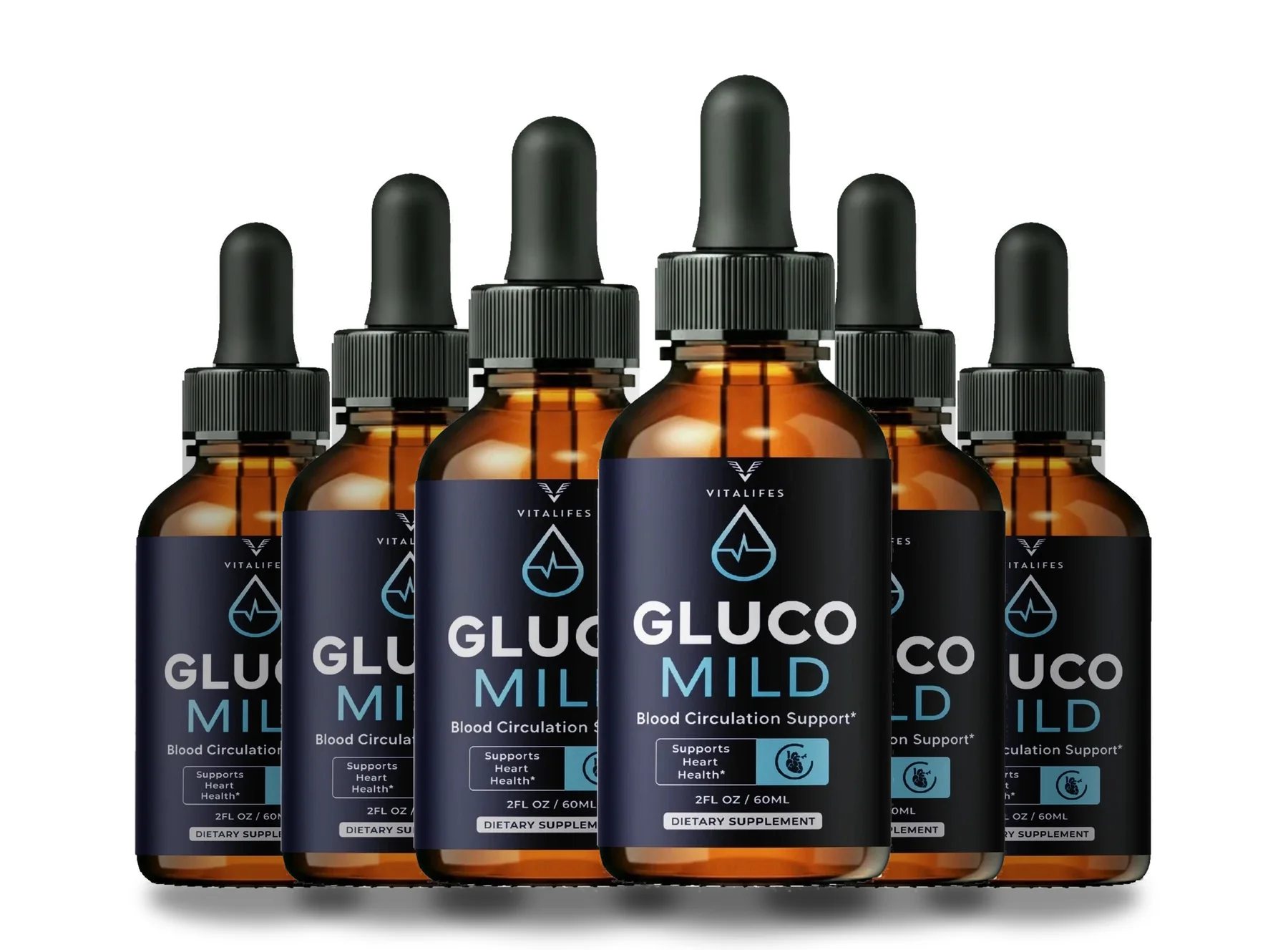
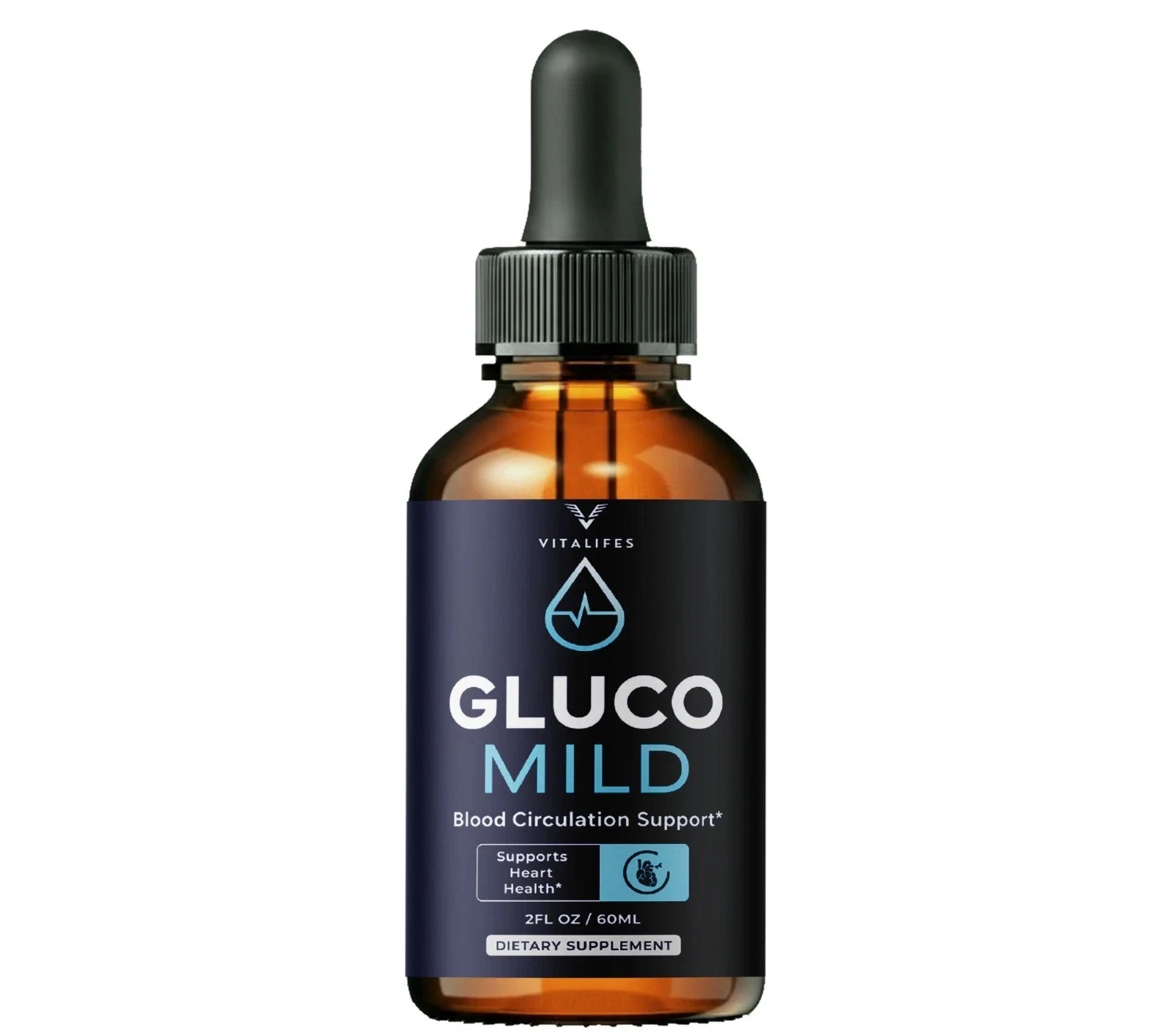
| 1. Amount printed for every active | No | There is no Supplement Facts panel on this pack: no back label, no carton, no insert. Seven extracts are named and none is quantified. |
| 2. Species and plant part named | Partly | Five of the seven carry the part in brackets: gotu kola leaf, hawthorn fruit, stone root, butcher's broom root, grape seed. Horse chestnut and motherwort do not. |
| 3. Form matches the studied form | Unknown | No standardisation marker is printed for any extract, so whether the horse chestnut is aescin-standardised or the hawthorn is WS 1442 cannot be established. |
| 4. Amount inside the researched range | Cannot be assessed | This follows from check one. With no figure on the label there is nothing to compare with the trial doses. |
| 5. Seals agree with the ingredient list | Partly | The four pack seals describe a factory, an origin and a returns promise, and none claims to be a test of the formula. Two separate marketing panels name benefits and botanicals the label does not. |
| 6. Refund route with a telephone number | Yes, with a gap | A published order desk on +1 (302) 200-3480 and a named returns address in Long Island City. The seal carries no number of days, so the window has to be read at the checkout. |
| 7. Label stays inside the claims line | Yes | The two printed lines are blood circulation support and supports heart health, both carrying the structure and function marker. Nothing on the bottle mentions glucose or blood sugar. |
Scored against the checklist above rather than against a competitor. The first row is the one that matters most, and it is a no.
One yes, two partlys, two unknowns and one clear no, with the no falling on the check everything else depends on. Stating that on the website that sells the bottle is the point of writing the checklist before scoring anything against it.
What sits on the other side of the ledger is that the seven names are the right seven for the use case. Five of them have venous trials behind them and the list reads like a formulator who knew the literature. The failure is in what was published about the bottle rather than in what went into it, and the two are genuinely different criticisms.
The practical consequence for a buyer is that this is a formula to test rather than to stock up on. One bottle, eight weeks, and a return window read at the checkout before paying. The pricing page keeps the four packs in their normal shape and prints where the figure lives, and the guarantee page says exactly what the seal does and does not carry.
Sources behind the seven checks
The trials the dose figures come from, and the consumer guidance behind checks six and seven.
- Horse Chestnut. National Center for Complementary and Integrative Health, National Institutes of Health. States that the raw seeds, bark, flowers and leaves are unsafe taken by mouth because they contain a toxic component. https://www.nccih.nih.gov/health/horse-chestnut
- Diehm C, Trampisch HJ, Lange S, Schmidt C. Comparison of leg compression stocking and oral horse-chestnut seed extract therapy in patients with chronic venous insufficiency. Lancet. 1996;347(8997):292-4. PMID 8569363. https://pubmed.ncbi.nlm.nih.gov/8569363/
- Tauchert M. Efficacy and safety of crataegus extract WS 1442 in comparison with placebo in patients with chronic stable New York Heart Association class-III heart failure. Am Heart J. 2002;143(5):910-5. PMID 12040357. https://pubmed.ncbi.nlm.nih.gov/12040357/
- Odai T, Terauchi M, Kato K, Hirose A, Miyasaka N. Effects of grape seed proanthocyanidin extract on vascular endothelial function in participants with prehypertension: a randomized, double-blind, placebo-controlled study. Nutrients. 2019;11(12):2844. PMID 31757033. https://pubmed.ncbi.nlm.nih.gov/31757033/
- De Sanctis MT, Belcaro G, Incandela L, et al. Treatment of edema and increased capillary filtration in venous hypertension with total triterpenic fraction of Centella asiatica: a clinical, prospective, placebo-controlled, randomized, dose-ranging trial. Angiology. 2001;52 Suppl 2:S55-9. PMID 11666125. https://pubmed.ncbi.nlm.nih.gov/11666125/
- Boyle P, Diehm C, Robertson C. Meta-analysis of clinical trials of Cyclo 3 Fort in the treatment of chronic venous insufficiency. Int Angiol. 2003;22(3):250-62. PMID 14612852. https://pubmed.ncbi.nlm.nih.gov/14612852/
- Martinez-Zapata MJ, Vernooij RW, Simancas-Racines D, et al. Phlebotonics for venous insufficiency. Cochrane Database Syst Rev. 2020;11(11):CD003229. PMID 33141449. https://pubmed.ncbi.nlm.nih.gov/33141449/
- Gloviczki P, Lawrence PF, Wasan SM, et al. The 2022 Society for Vascular Surgery, American Venous Forum, and American Vein and Lymphatic Society clinical practice guidelines for the management of varicose veins of the lower extremities. Part I. J Vasc Surg Venous Lymphat Disord. 2023;11(2):231-261.e6. PMID 36326210. https://pubmed.ncbi.nlm.nih.gov/36326210/
- Questions and Answers on Dietary Supplements. U.S. Food and Drug Administration. https://www.fda.gov/food/information-consumers-using-dietary-supplements/questions-and-answers-dietary-supplements
- Navarro V, Avula B, Khan I, et al. The contents of herbal and dietary supplements implicated in liver injury in the United States are frequently mislabeled. Hepatol Commun. 2019;3(6):792-794. PMID 31168513. https://pubmed.ncbi.nlm.nih.gov/31168513/
- Using Dietary Supplements Wisely. National Center for Complementary and Integrative Health, National Institutes of Health. https://www.nccih.nih.gov/health/using-dietary-supplements-wisely
- Dietary Supplements: What You Need to Know. Office of Dietary Supplements, National Institutes of Health. https://ods.od.nih.gov/factsheets/WYNTK-Consumer/
Test Gluco Mild the way the checklist suggests
One bottle, eight weeks, and the return window read on the seller's checkout page before you pay rather than afterwards.
Price shown at the seller’s checkout · seller’s satisfaction money-back guarantee
Order Gluco Mild On The Official WebsiteTwo drops a day · 2 fl oz / 60 ml a bottle · lot GLU-26/GO-6518