Gluco Mild Official Website › Blog › Two Drops Or Two Millilitres
Two Drops Or Two Millilitres? Reading A Contradictory Dose
The bottle says two drops a day. The marketplace listing says 2 ml a serving, thirty servings a bottle. Those are not two ways of saying the same thing: they differ by roughly fortyfold, and the same bottle is either a month’s supply or the better part of two years.
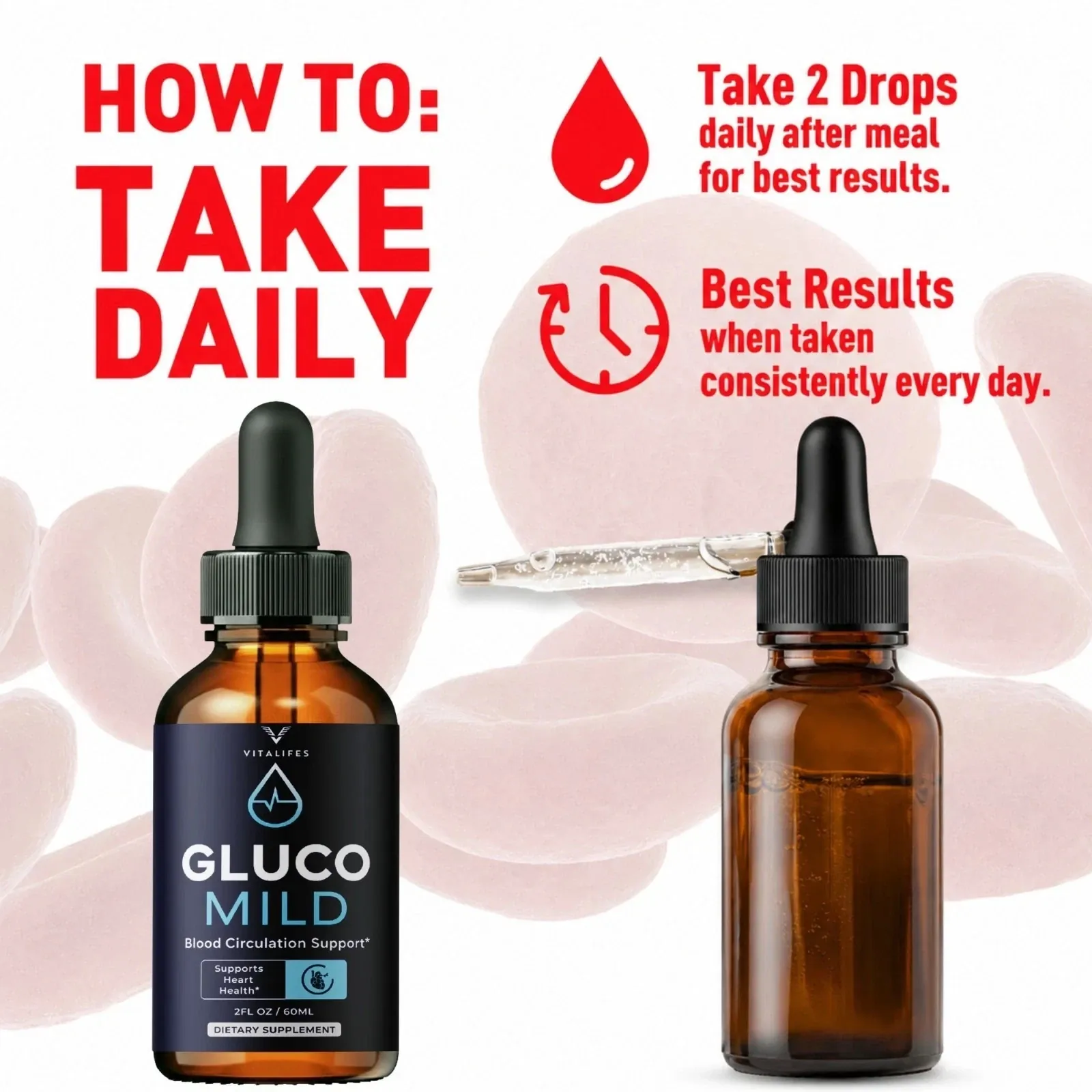
- Two sources give two different servings for the same bottle: two drops on the label, 2 ml on the listing.
- Two drops is roughly a tenth of a millilitre, so the difference is about fortyfold.
- Both agree on frequency: once a day, after food.
- The house rule on this website is that the label wins, because the bottle is the document that arrives in the box.
- Follow the bottle you received. If your bottle prints something different again, follow that, and tell the order desk.
The conflict, set out plainly
This website states this once, in full, rather than hedging about it on every page. Here is the whole of it:
| The printed label | The marketplace listing | |
|---|---|---|
| The direction | Take 2 drops daily after a meal for best results | 2 ml per serving, 30 servings a bottle |
| Roughly how much liquid | About 0.1 ml | 2 ml |
| How long a 60 ml bottle lasts | Around 600 days | 30 days |
| How often | Once a day | Once a day |
| Where it is printed | On the bottle that arrives in the box | On a web page that can be edited at any time |
| Which this website follows | This one | — |
The two directions differ by roughly fortyfold. Both agree the serving is taken once a day, which is the only row where they meet.
Nothing else in the seller's material conflicts. The seven ingredient names on the listing artwork are the seven on the pack, in the same order. The bottle size agrees. The frequency agrees. This one row is the exception, and it is the row about how much to take.
What fortyfold actually means here
A drop from a standard dropper is conventionally taken as about 0.05 ml, so two drops is roughly a tenth of a millilitre. Against 2 ml that is a factor of about twenty on the serving, and the bottle arithmetic stretches it further.
A 60 ml bottle at 2 ml a day is thirty servings, which is where the listing's figure comes from and why it is internally consistent. The same bottle at two drops a day is somewhere near six hundred days.
Those two are not a rounding difference or a labelling convention. They are two different products in everything except the glass: a month's course, or a supply that would outlast most people's interest in taking it.
Why the listing figure is internally consistent
It is worth noticing that the listing is not careless in isolation. Sixty millilitres divided by 2 ml is exactly thirty, so its serving size and its servings-per-container agree with each other and with the bottle volume. That is what a Supplement Facts panel would normally establish, and it is the sort of consistency that makes a figure look authoritative.
The label's direction has no such arithmetic attached to it, because there is no panel on this pack to carry one. It simply says two drops after a meal. That is a weaker-looking document and it is the one printed on the object you hold.
Which document wins, and why
The rule this website is written under is that the label wins, and it is worth explaining rather than asserting.
| Situation | Which document wins | Why |
|---|---|---|
| Label and listing give different servings | The label | The bottle is the document that travels in the box and the one you have in front of you |
| Label and listing name different ingredients | The label | Listing artwork is marketing copy and is edited without reprinting anything |
| The label is silent and the listing supplies a figure | The listing, stated as its source | Something attributed is better than a blank, as long as the attribution is visible |
| Both are silent | Neither | The figure does not get invented. This is where the price and the guarantee window sit |
The house rule this website is written under, set out so a reader can check that it was followed rather than take it on trust.
Three reasons sit behind the first row. A printed label is a physical artefact produced at a specific time for a specific production run, and it is the thing a buyer has in front of them when they take a dose. A listing is a web page that can be rewritten in a minute without anything in the warehouse changing. And where the two disagree, the one in the box is the one that was checked against what went into the bottle.
The rule cuts against the seller as often as for it, which is what makes it a rule rather than a preference. On this website it has already removed a price and a guarantee window from the pages, because neither could be read from a document this desk trusts.
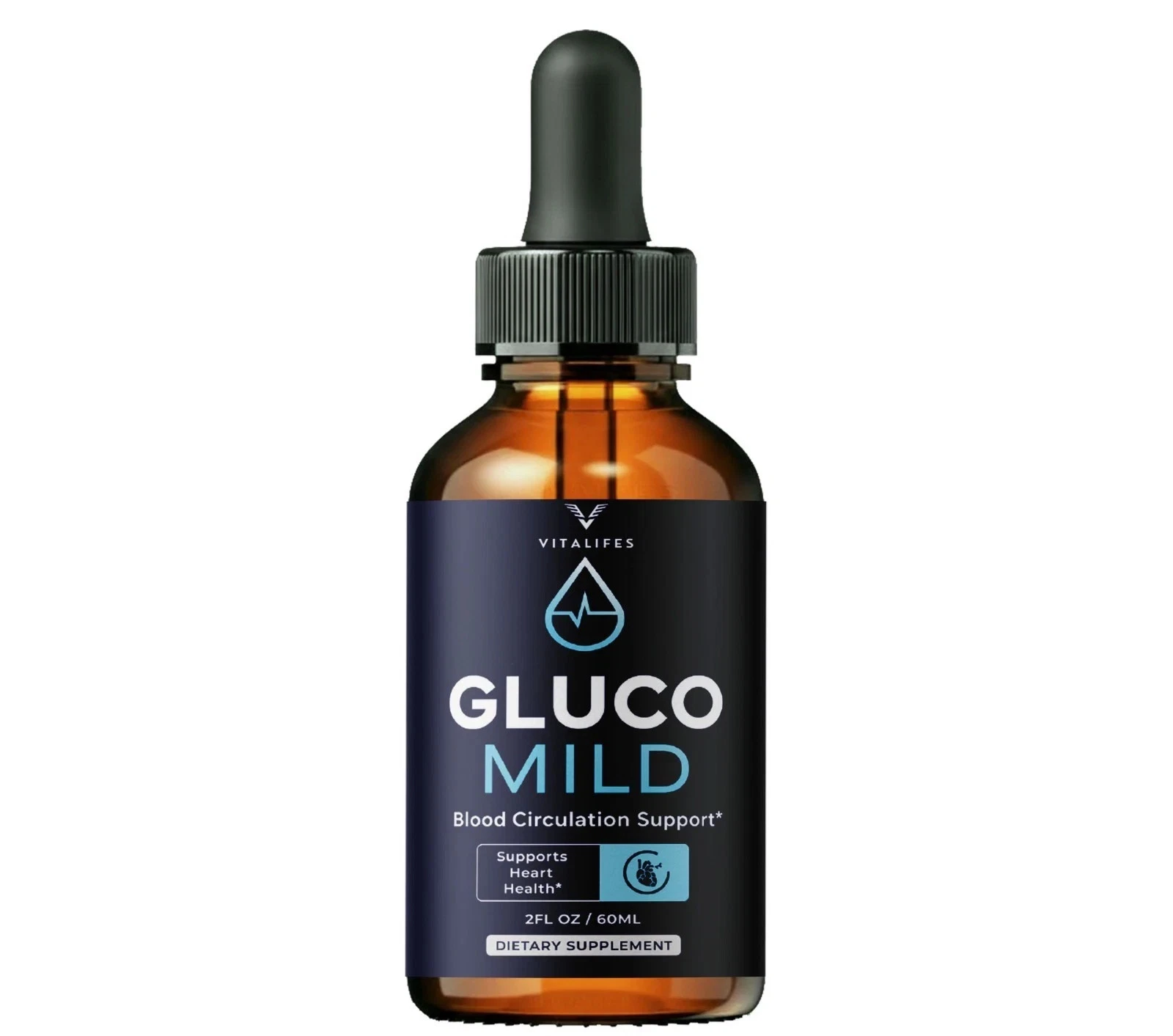
Gluco Mild is taken once a day, after food
Two drops after a meal is the direction printed on the bottle. Seven named botanical extracts in a 2 fl oz amber dropper bottle, with the return window shown at checkout.
Price shown at the seller’s checkout · seller’s satisfaction money-back guarantee
Order Gluco Mild On The Official WebsiteTwo drops a day · 2 fl oz / 60 ml a bottle · lot GLU-26/GO-6518
Why this happens to liquid supplements
Dropper products are unusually prone to this, and the reasons are mundane rather than sinister.
A drop is not a unit of volume. It depends on the dropper aperture, the viscosity of the liquid, the temperature and how the bottle is held, which is why pharmacopoeias define a drop only approximately. A marketplace listing form, meanwhile, usually demands a serving size in millilitres and a servings-per-container integer, and somebody has to type something into those fields.
So a listing figure can be produced by arithmetic on a bottle volume rather than by reading a label, and the number that results is consistent, plausible and unconnected to what the bottle says.
- A drop varies with aperture, viscosity and temperature, so it is an approximate unit by nature.
- Marketplace listing forms require millilitre figures, which invites a calculation rather than a transcription.
- Liquid supplements rarely carry the panel that would force the two to agree.
- Nobody reprints a label when a listing is edited, so the drift is one-directional.
What to do with the bottle in front of you
- Read your own bottle first. Labels change between production runs. Whatever it prints is the direction to follow, even if it differs from this page.
- Follow the printed direction. On the artwork this desk holds, that is two drops daily after a meal.
- Pick a meal and keep it. The direction says after a meal without naming which. Consistency over weeks is what the trials behind these plants actually tested.
- Do not split the difference. Averaging two contradictory instructions produces a third figure that neither document supports.
- Ask the order desk if your bottle is unclear. +1 (302) 200-3480 can match a bottle to a production run by its lot number, which is the fastest way to establish which label you have.
The reason this cannot simply be resolved
A Supplement Facts panel would settle this in one line, and there is not one. This pack has no back label, no carton and no insert, so there is no serving-size row to arbitrate between the two directions and no milligram figure that would make either of them meaningful.
That is the deeper problem and it is worth being honest about the shape of it. Even if the serving were agreed tomorrow, nobody could say what quantity of any extract it delivered, because no amount is printed for any of the seven names on the artwork.
The published trials all report doses. The horse chestnut comparison against compression stockings ran at 50 mg of aescin twice daily. The gotu kola dose-ranging trial compared 30 mg and 60 mg three times a day. The hawthorn comparison showed 1,800 mg a day working where 900 mg did not. Against those figures, a dispute about drops is a dispute about a multiplier applied to an unknown.
Reading any dropper label
Four habits transfer to any liquid supplement, not just this one.
- Compare the serving with the bottle volume. If they do not divide into a sensible number of days, one of the two figures is wrong.
- Check whether the dropper is graduated. A marked pipette makes a millilitre instruction usable; a plain one makes it guesswork.
- Prefer the printed label over any web page. The bottle was made once; the page is edited continuously.
- Treat a drop as approximate. It is not a defined volume and no two droppers deliver quite the same one.
Five questions to settle before the first dose
- What does your own bottle print, word for word?
- Is the dropper graduated, and if so in what units?
- Does the serving and the bottle volume produce a whole number of days?
- Is there any panel anywhere in the packaging that quantifies anything?
- If the answer to the last one is no, is this a product to test with one bottle rather than to stock up on?
On this product the answers run: two drops after a meal, an ungraduated dropper, no consistent day count, no panel anywhere, and yes. The pricing page keeps the four packs in their usual shape, and one bottle is the sensible first rung on that ladder.
A dietary supplement for healthy adults of 18 and over, sold as blood circulation and heart health support. Not a medicine and not FDA-approved. The name contains the word gluco and the label does not, and no page here claims an effect on blood sugar. Follow the bottle that arrived in your box.
References
- De Sanctis MT, Belcaro G, Incandela L, et al. Treatment of edema and increased capillary filtration in venous hypertension with total triterpenic fraction of Centella asiatica: a clinical, prospective, placebo-controlled, randomized, dose-ranging trial. Angiology. 2001;52 Suppl 2:S55-9. PMID 11666125. https://pubmed.ncbi.nlm.nih.gov/11666125/
- Diehm C, Trampisch HJ, Lange S, Schmidt C. Comparison of leg compression stocking and oral horse-chestnut seed extract therapy in patients with chronic venous insufficiency. Lancet. 1996;347(8997):292-4. PMID 8569363. https://pubmed.ncbi.nlm.nih.gov/8569363/
- Tauchert M. Efficacy and safety of crataegus extract WS 1442 in comparison with placebo in patients with chronic stable New York Heart Association class-III heart failure. Am Heart J. 2002;143(5):910-5. PMID 12040357. https://pubmed.ncbi.nlm.nih.gov/12040357/
- Using Dietary Supplements Wisely. National Center for Complementary and Integrative Health, National Institutes of Health. https://www.nccih.nih.gov/health/using-dietary-supplements-wisely
- Dietary Supplements: What You Need to Know. Office of Dietary Supplements, National Institutes of Health. https://ods.od.nih.gov/factsheets/WYNTK-Consumer/
- Questions and Answers on Dietary Supplements. U.S. Food and Drug Administration. https://www.fda.gov/food/information-consumers-using-dietary-supplements/questions-and-answers-dietary-supplements